
The problem
Elections do not put ordinary people in power. They select a self-chosen political class, then reward its members for winning and keeping office.
Terry Bouricius · Open Access
Today, we call a system democratic if it lets people vote for leaders. But elections do not produce rule by the people. They produce politicians—people trained, funded, and rewarded for winning elections.
If democracy means what the word says, ordinary people must hold a direct share of public power. Democracy Without Politicians asks what that government could look like.
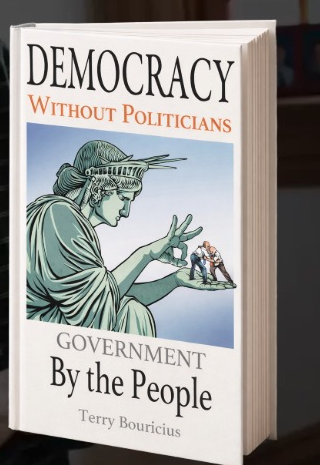
The central claim
Elections do not put ordinary people in power. They select a self-chosen political class, then reward its members for winning and keeping office.
Sortition chooses ordinary citizens by lot, creating a fair cross-section of the public rather than another contest among political professionals.
Networks of citizen bodies could hear evidence, deliberate, propose, review, and decide—making public power something people actually share.
If democracy means rule by the people, why do the people never actually rule?
What readers say
“I've known and worked with Terry for decades, and his new book is a thought-provoking and deeply-researched take on how democracy might be reformed to genuinely allow government by the people.”
"I live in a small Vermont town where we govern ourselves--pretty darned well--by annual town meeting, where everyone participates. So I think we should take seriously the idea that governing doesn't require a special caste of life-long officeholders, and that all of us are actually up to the task."
"This book pulls together decades of research and critique on random selection as a replacement for elections in democracy. Bouricius argues that the failure of elections is inevitable owing to the very nature of individuals and societies, then explains why choosing representatives through a sortition system can overcome these problems and deliver on the promise of democracy as the best means of governing ourselves."
"The likes of Jefferson, Madison, and Adams feared that an oligarchy of wealth, rather than of virtue and talent, might come to rule through elections. In this important new book, Bouricius meticulously explains why elections have failed to achieve democratic rule, or even the bare minimum of holding politicians to account. By reviving the ancient democratic tool of sortition—citizen juries—he shows us how to bypass the bought-and-paid-for political class and finally realize the promise of a government 'by the People."
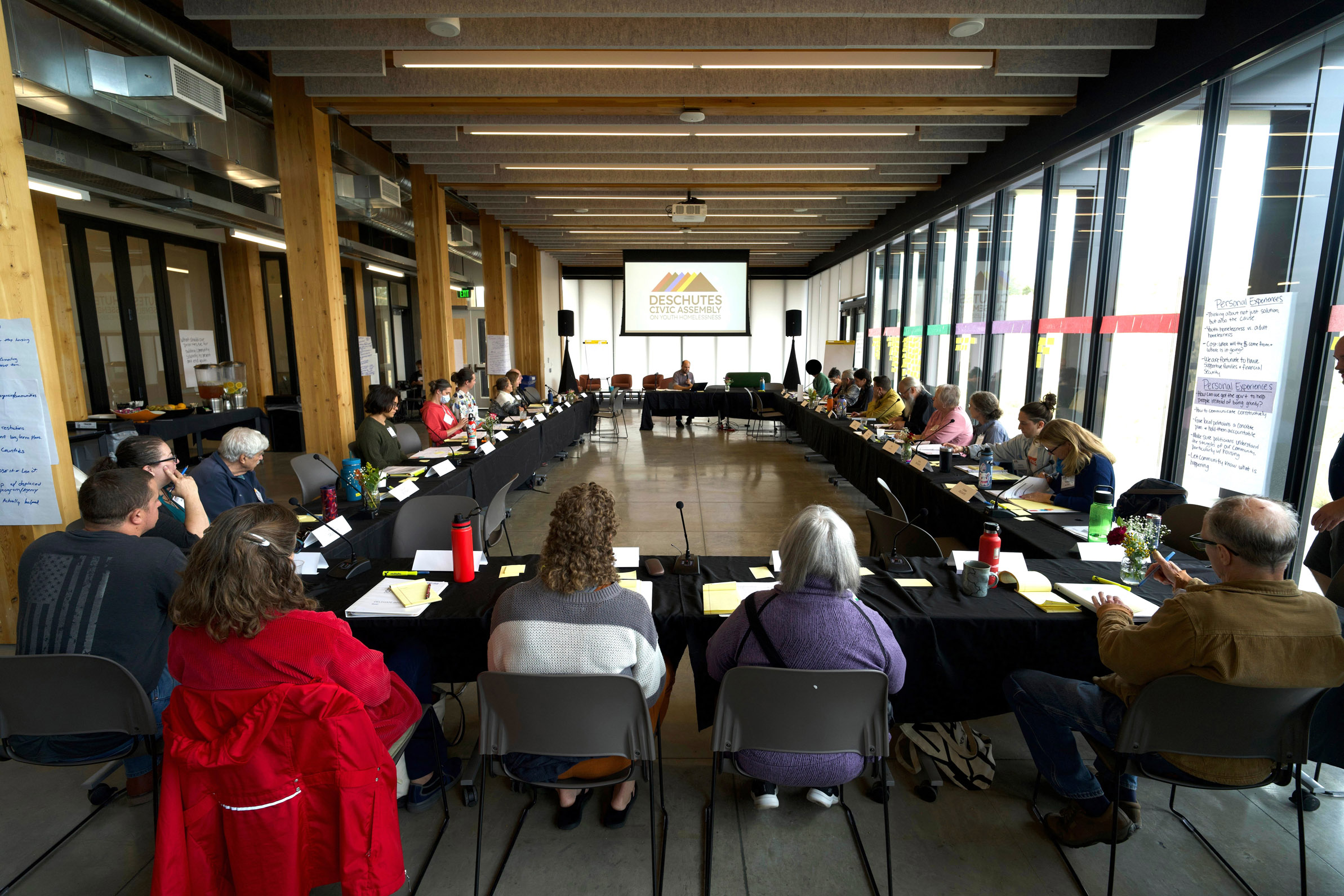
Citizens at work
Randomly selected citizens’ assemblies are already being used to take on difficult public questions.
Ordinary people can study evidence, hear from experts and advocates, deliberate with one another, and make considered public recommendations—without campaigning for office first.
Explore Terry’s researchThe book is open access
A practical argument for moving democracy beyond elections and giving ordinary citizens a direct share of public power.